
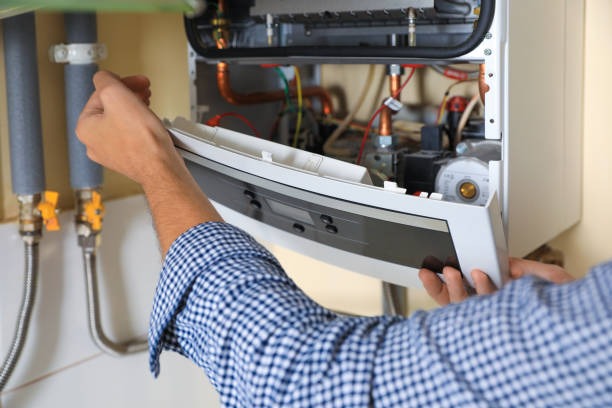
Gas boilers and heat pumps are two popular choices for home heating systems. Each has its own set of advantages and drawbacks, making it essential to understand the differences before making a decision.
Gas boilers have been a traditional choice for many homeowners due to their efficiency and reliability. They operate by burning natural gas or propane to heat water, which is then circulated through radiators or underfloor heating systems to warm the house. One key advantage of gas boilers is their ability to provide consistent heat even during the coldest months.
On the other hand, gas boilers can be costly in terms of installation and maintenance. They also emit carbon dioxide into the atmosphere when burning fuel, contributing to global warming. Moreover, they require a constant supply of natural gas or propane which may not be readily available in some areas.
Heat pumps work differently from conventional heating systems as they transfer heat rather than generate it directly. During winter, they extract warmth from outside air (even if it’s cold) and pump it indoors; while in summer, they reverse this process providing cooling effect. This makes them an efficient year-round solution for both heating and cooling needs.
Heat pumps are more environmentally friendly compared with gas boilers since they don’t burn fossil fuels thus reducing carbon emissions significantly. Furthermore, since most modern units come equipped with smart technology features like programmable thermostats and zoning capabilities; homeowners can precisely control temperatures room-by-room leading to further energy savings.
However, heat pumps also have certain limitations worth considering: Firstly, their performance can decrease as outdoor temperatures drop below freezing point making them less effective in extremely cold climates unless paired with a secondary source of heat such as electric resistance heaters or high-efficiency gas furnaces; Secondly, upfront costs can be higher than traditional heating solutions though over time these costs could be offset by lower operational expenses.
In conclusion: If you live in an area where natural gas is readily available and winters are harshly cold – A high-efficiency comparison gas boiler vs heat pump could be a more suitable choice. But if you are looking for an environmentally friendly solution that can provide both heating and cooling, or live in an area with milder winters – A heat pump might be the better option.
It is always recommended to consult with a professional HVAC contractor before making a decision. They can assess your specific needs, local climate conditions and available energy sources; providing tailored advice on the most cost-effective and efficient system for your home.